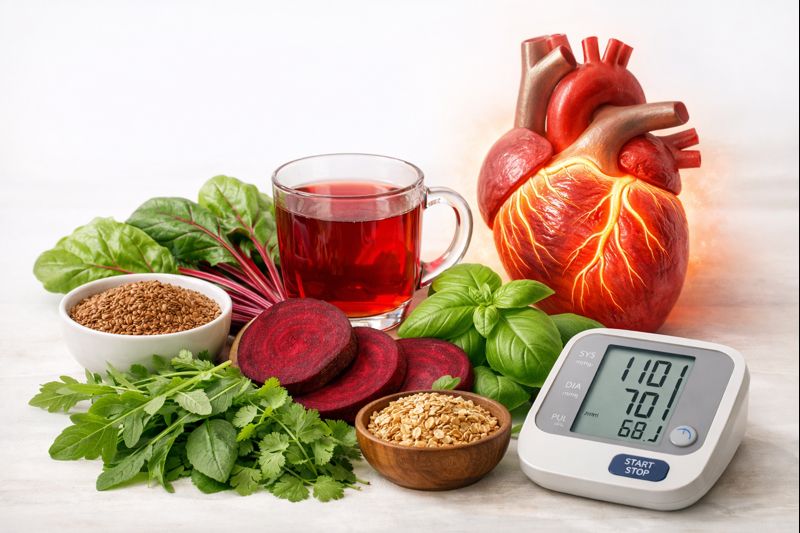
High blood pressure is not just a “doctor’s office issue” or a harmless case of white coat syndrome. Transient spikes and chronically elevated readings both strain the blood vessels, increase the risk of stroke and heart disease, and silently damage organs over time.
Despite the availability of multiple blood pressure medications, about 50% of people eventually fail single-drug therapy, and roughly 75% of people with hypertension do not have it under good control. There are three main reasons for this:
- Blood pressure medication is often a temporary band-aid on a lifestyle problem.
- There is no pill that can by itself repair an unhealthy lifestyle.
- Many people do not like taking medication long-term, especially if it is expensive or causes side effects.
Targeted nutrition and lifestyle changes are therefore crucial. The good news: several foods have been shown to measurably lower blood pressure and reduce cardiovascular risk, while also improving overall metabolic health.
1. Flaxseeds: “Brown Gold” for Blood Pressure and Metabolism
Whole flaxseeds are repeatedly highlighted as a powerful functional food for hypertension.
- Eating flaxseed-based foods (such as flaxseed muffins) has been shown to lower diastolic blood pressure by about 7 points.
- A reduction of this magnitude is associated with approximately 46% fewer strokes and 29% fewer cases of heart disease over time.
- For comparison, some calcium-channel blocker medications (e.g., amlodipine) may lower blood pressure by about 8 points.
Unlike a single-target drug, flaxseeds provide multiple side benefits:
- Lower total cholesterol and triglycerides
- Better blood sugar control
- Reduced inflammation
- Relief from constipation
- Documented anti-cancer properties
Flaxseeds are typically crushed or ground and sprinkled on foods such as oatmeal to improve absorption and efficacy.
2. Hibiscus Tea: A Plant-Based Alternative Comparable to a Drug
Hibiscus tea, made from the bright red hibiscus flower, is another antioxidant-rich option for natural blood pressure support.
Key data from clinical comparisons:
- Regular intake of hibiscus tea can lower blood pressure by about 6 points.
- A drop of as little as 5 points in blood pressure has been associated with:
- 14% lower risk of stroke
- 9% lower risk of fatal heart attack
- 7% reduction in overall mortality
- In a head-to-head trial, hibiscus tea was as effective as the starting dose of the blood pressure medication captopril.
Small numerical changes matter because blood vessels are narrow structures; modest reductions in pressure can produce significant reductions in long-term risk.
3. Nitric Oxide–Rich Greens and Herbs
Arugula and Leafy Greens
Arugula is identified as one of the top leafy greens for blood pressure because it is exceptionally high in naturally occurring nitric oxide. Among plants, it is considered one of the richest nitric oxide sources.
Nitric oxide:
- Helps blood vessels relax and dilate
- Improves blood flow locally where it is needed
- Does so without the broad systemic side effects often seen with pharmacologic agents
How Medicine Uses the Same Pathway
Several cardiovascular drugs work by enhancing nitric oxide signaling:
- Nitroglycerin opens coronary arteries to relieve chest pain (angina).
- Sildenafil (Viagra) boosts nitric oxide to improve blood flow, used for erectile dysfunction and pulmonary hypertension.
Low nitric oxide availability is linked with constricted arteries, reduced blood flow, and higher heart attack risk. Antioxidant-rich foods and greens can upregulate nitric oxide synthase, helping the body produce more nitric oxide naturally.
Beets and Beet Greens
Beets and their greens are heavily used by athletes to “biohack” performance through nitric oxide.
- Drinking one cup of beet juice daily for four weeks can lower blood pressure by about 8 points.
- The effect reverses when intake stops, similar to what happens when blood pressure medication is discontinued.
Basil, Cilantro, Butter Lettuce & Swiss Chard
Certain herbs and greens also contribute:
- Basil – rich in nitric oxide and antioxidants, traditionally used in Mediterranean dishes.
- Cilantro – commonly used in salsa and many cuisines; provides antioxidants and vascular support.
- Butter lettuce – milder flavor but still provides nitric oxide.
- Swiss chard – especially notable because it contains more nitric oxide than beets and can be eaten raw (young leaves) or cooked (larger leaves in stir-fries or soups).
It is not practical to replace these foods with standard vegetable juices. For example, it would take an estimated 19 quarts of a typical vegetable juice product (like V8) per day to approximate the nitric oxide impact of these whole greens—an unhealthy and unrealistic approach.
4. Whole Grains vs. Refined Grains: A Hidden Blood Pressure Lever
If diet consisted only of greens and herbs, most people would not consume enough energy for daily life. Whole grains are an important, supportive component.
- Eating approximately three portions of whole grains per day can lower blood pressure comparably to some “water pills” (diuretic medications)—without the electrolyte imbalances often seen with those drugs.
- Whole grains also:
- Lower the risk of diabetes
- Lower the risk of heart disease
- Lower the risk of colon cancer
- Support healthy weight management
It is essential to distinguish whole grains from refined grains:
- Whole grain = bran + germ + endosperm intact
- Refined grain = mostly endosperm (starch); bran and germ removed
Removing bran and germ strips away fiber and protein, leaving a high-glycemic starch load that the body must process rapidly. This burden increases when refined grains are milled into flour and consumed as dehydrated products such as bread, cookies, and similar items.
Even refined grains eaten “wet,” such as white rice, carry risk:
- Just one serving of white rice can raise diabetes risk by about 17%.
- Replacing just one-third of a serving per day of white rice with a whole grain can reduce diabetes risk by about 16%.
Some whole grains are more beneficial than others, but the key principle is to favor intact, minimally processed grains over refined starches.
5. Lifestyle, Spikes, and Self-Monitoring
Blood pressure is dynamic, not static:
- It is lower at rest and in calm states.
- It rises with intense exercise, anger, fear, or stress.
- Repeated or sustained spikes are damaging to blood vessels.
Additional practical points from real-world observation:
- About 63% of Americans consume sugar-sweetened beverages. Regular intake can undermine blood pressure and metabolic health, while also adding significant financial cost over a year.
- In one documented case, simply walking up and down a flight of stairs 20 times reduced systolic blood pressure by almost 40 points in about 30 minutes.
- People often discover that blood pressure fluctuates throughout the day and can be influenced by meals (especially restaurant food, refined carbohydrates, and saturated fats), stress, and activity.
Home Blood Pressure Monitoring
Accurate self-monitoring is critical:
- Use a clinically validated blood pressure monitor.
- Position the cuff so the marker aligns with the brachial artery in the bend of the elbow (antecubital fossa).
- Keep the arm at heart level during measurements.
- Measure blood pressure in different states: at rest, after walking, in various postures, and during different emotional states, to ensure it is not abnormally high or low under typical daily conditions.
Regular exercise is emphasized as the single most effective lifestyle tool to lower and stabilize blood pressure. Well-conditioned individuals often demonstrate resting readings in the 90s systolic with normal diastolic values, illustrating the impact of sustained physical activity.
6. Medications, Side Effects, and the Role of Diet
Several major blood pressure drug classes work by disrupting normal physiological pathways:
- Calcium channel blockers can lower blood pressure but may also:
- Slow heart rate
- Cause ankle swelling
- Worsen constipation
- Lead to fatigue, irregular heartbeats, headaches, and lightheadedness
- Some data associate them with increased breast cancer risk
- Beta blockers can cause lethargy and impotence.
- ACE inhibitors can, in rare cases, cause life-threatening swelling (angioedema).
- Diuretics (“water pills”) can disturb electrolytes.
Medications can be essential and life-saving, especially in emergencies and when blood pressure is dangerously high. However, they do not remove the underlying drivers of hypertension.
By contrast, food-based interventions such as flaxseeds, hibiscus tea, nitric-oxide-rich greens, herbs, and whole grains:
- Lower blood pressure
- Improve lipid profiles
- Support healthy blood sugar
- Reduce systemic inflammation
- Decrease the risk of multiple chronic conditions
These are side benefits, not side effects.
For added vascular support, see The Ultimate Arterial Support Stack: Vitamin D3, Vitamin K2, Magnesium Glycinate, Serrapeptase & Nattokinase.
Dietary nitrates from vegetables such as beets and leafy greens enhance nitric oxide production and improve vascular function — see NIH review: https://www.ncbi.nlm.nih.gov/pmc/articles/PMC3529680/
This content is for informational purposes only and is not intended as medical advice. Always consult with a qualified healthcare professional before making changes to your diet, medication, or health routine, especially if you have high blood pressure or underlying medical conditions.