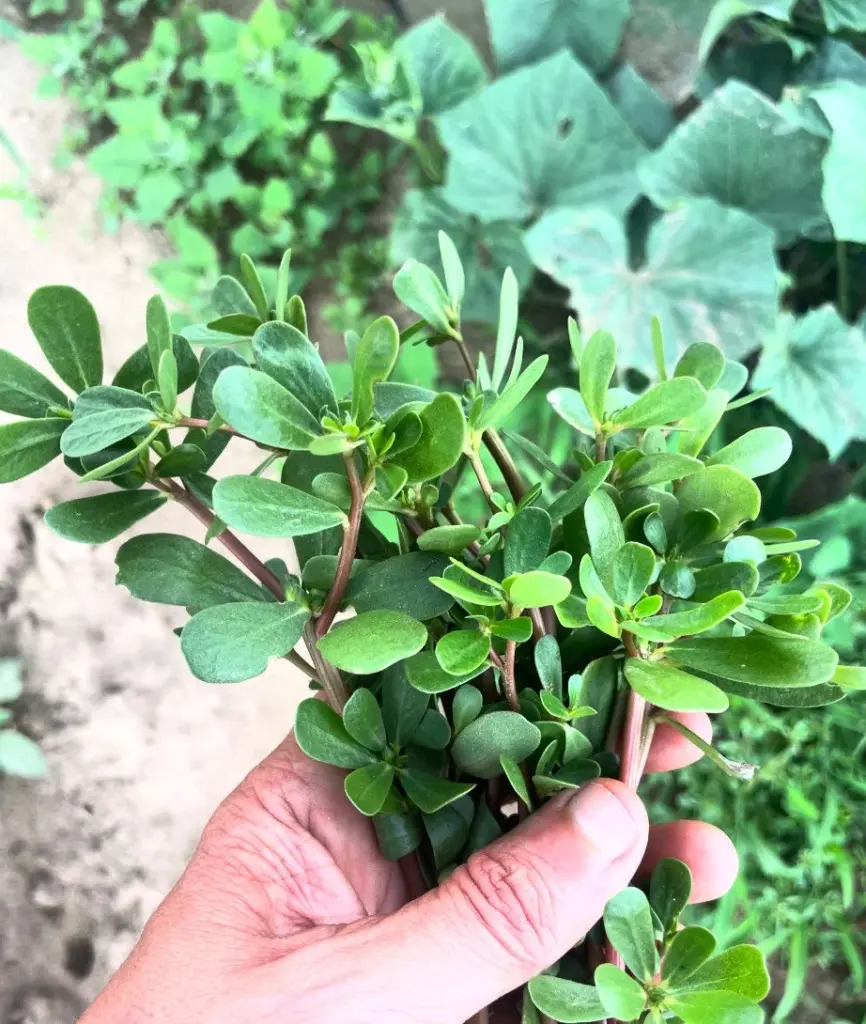
Right now—likely growing between the cracks of a driveway, sidewalk, or garden bed—there is a humble plant with red stems and succulent green leaves that quietly outperforms salmon as a source of omega-3 fatty acids per leaf. It has nourished humanity for over 4,000 years, sustained entire civilizations, and baffled modern scientists with biological abilities once thought impossible.
That plant is purslane (Portulaca oleracea)—and despite its extraordinary nutritional and ecological value, it is widely dismissed as a weed.
A Forgotten Staple of Ancient Civilizations
Purslane is not a modern discovery or fringe survival food. Archaeological evidence places it firmly among humanity’s earliest cultivated plants.
Seeds stored in clay vessels in northern Greece date back to 1050 BC and were still viable when unearthed 3,000 years later. Ancient Greek scholars such as Theophrastus wrote detailed instructions for cultivating purslane alongside essential crops. The Romans grew it across three continents. Medieval Europeans consumed it daily. In 13th-century Milan, it appeared on official food inventories—not as a curiosity, but as a staple.
Long before European contact, Native American agricultural societies were also cultivating purslane. Seeds found in Ontario, Kentucky, and across the eastern United States confirm its use thousands of years ago. Two civilizations separated by oceans both concluded the same thing: this plant was essential.
The Omega-3 Paradox That Shocked Science
In the mid-20th century, researchers sought to understand why certain populations experienced remarkably low rates of heart disease. One of the most influential investigations, the Seven Countries Study, revealed a paradox: farmers on the Greek island of Crete consumed high-fat diets yet had the lowest cardiovascular mortality ever recorded.
For decades, olive oil received the credit. But when scientists later re-examined frozen blood samples, a different factor stood out—exceptionally high omega-3 fatty acid levels.
The source was not fish.
It was purslane.
Consumed daily by both people and livestock, purslane formed the foundation of the island’s food system. The animals ate purslane. The people ate the animals. Omega-3s circulated through the entire ecosystem.
The Most Omega-3-Dense Vegetable Ever Measured
Nutritional analysis revealed numbers that seemed almost implausible:
- 300–400 mg of alpha-linolenic acid (ALA) per 100 grams of fresh leaves
- 5–7 times more omega-3 than spinach
- 15 times more than iceberg lettuce
Purslane is the richest vegetable source of omega-3 fatty acids ever recorded.
Even more surprising, it produces trace amounts of EPA (eicosapentaenoic acid)—a form of omega-3 typically found only in marine life. Land plants are not supposed to do this.
Yet purslane does.
Beyond omega-3s, purslane delivers exceptional levels of:
- Vitamin E (far exceeding spinach)
- Beta-carotene (surpassing carrots)
- Melatonin
- Glutathione
- Potassium, magnesium, and calcium
Few plants on Earth match its nutrient density.
Clinical Evidence With Life-Saving Implications
The impact of omega-3-rich, purslane-inclusive diets was tested directly in patients recovering from heart attacks. In a landmark clinical trial, one group received a standard low-fat cardiac diet, while the other followed a Mediterranean-style diet rich in omega-3s, walnuts, and purslane.
After five years, the results were so dramatic the study was halted early:
A 70% reduction in deaths from all causes in the purslane group.
Not just fewer heart attacks—fewer deaths overall.
The “Impossible” Plant That Rewrote Biology
Purslane’s value extends far beyond nutrition. In 2022, researchers studying drought-resilient plants made a discovery that challenged fundamental assumptions about plant biology.
Scientists at Yale University found that purslane performs two distinct types of photosynthesis simultaneously within the same cells—a phenomenon once thought biologically impossible.
- C4 photosynthesis enables rapid growth in high heat
- CAM photosynthesis conserves water by operating at night
Most plants can only do one—or must separate them into different tissues. Purslane does both at the same time, creating a uniquely efficient “super-plant” capable of thriving where most crops fail.
It grows on a fraction of the water required by corn or wheat, tolerates extreme heat and salinity, and completes its life cycle on minimal rainfall.
Why a Superfood Is Treated as an Enemy
Despite its unmatched resilience and nutritional power, purslane has been systematically eradicated. Herbicides worth billions are designed specifically to kill it. Agricultural guidelines label it invasive. Homeowners are taught to poison it on sight.
The reason is not ecological harm.
It is economic incompatibility.
Purslane cannot be patented. Its seeds remain viable for decades. It reproduces freely, grows without inputs, and produces more omega-3 per acre than any cultivated crop—without infrastructure, supplements, or supply chains.
In a world where omega-3s are sold as expensive capsules and fish stocks are collapsing, purslane offers the same nutrients for free.
A Global Food That Never Disappeared
While industrialized societies forgot purslane, much of the world never did.
- In India, it is known as kulfa
- In Greece, glistreida
- In Mexico, verdolagas
- In China, it has been cultivated continuously for millennia
- Across the Middle East and Mediterranean, it remains a seasonal staple
The divide is not cultural—it is industrial.
How to Identify, Harvest, and Eat Purslane
Purslane is easy to recognize once you know what to look for:
- Smooth, reddish stems that creep along the ground
- Thick, succulent, paddle-shaped leaves
- Juicy, translucent interior when snapped
- Tiny yellow flowers nestled between leaves
Harvest young plants within the first six weeks for the best flavor. Eat it raw in salads for a lemony, lightly salty crunch, sauté it like spinach, blend it into smoothies, or pickle it for later use.
Let a few plants go to seed and you will never need to plant again.
Rethinking What “Food” Really Is
Purslane challenges a deeply ingrained belief—that nourishment must come from stores, bottles, or engineered systems. It reminds us that some of the most powerful foods on Earth grow freely under our feet.
The plant capable of nourishing humanity in a warming, water-scarce future is not a lab invention.
It is already here.
The divide is not cultural—it is industrial. Purslane’s nutritional profile, boasting higher omega-3 fatty acids than salmon, positions it as a formidable contender in the realm of healthful foods. By cultivating this resilient plant, we not only embrace a sustainable source of nourishment but also challenge conventional agricultural practices. Recognizing and valuing purslane as a vital food source can pave the way for a more sustainable and health-conscious future.
For readers exploring other powerful plant-based healing foods, The Exhaustive Health Benefits of Soursop: Nature’s Most Powerful Healing Fruit offers additional insight into nutrient-dense fruits traditionally used for cellular and immune support.
Scientific analysis of purslane’s omega-3 fatty acid content and antioxidant profile is documented in peer-reviewed research published by the National Center for Biotechnology Information at
Disclaimer:
This content is for informational and educational purposes only and is not intended as medical advice. Always consult a qualified healthcare professional before making dietary or health-related changes.